Byron William Sandford
October 16, 1946 – January 10, 2026
"Who would have guessed he would have grown into such a powerful man? But we always knew he was special." — Thad
I.
The Stock He Came From
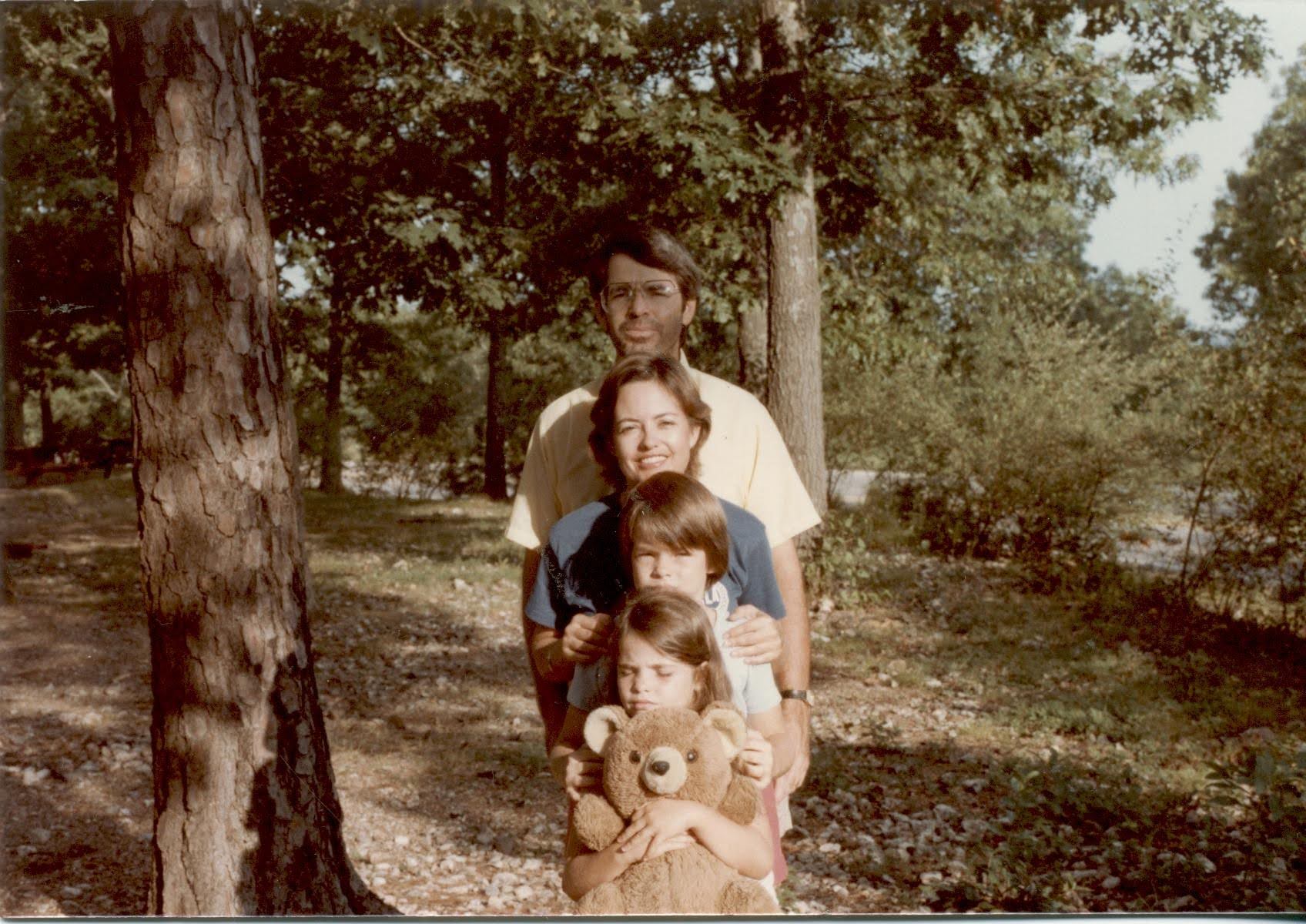
The young family
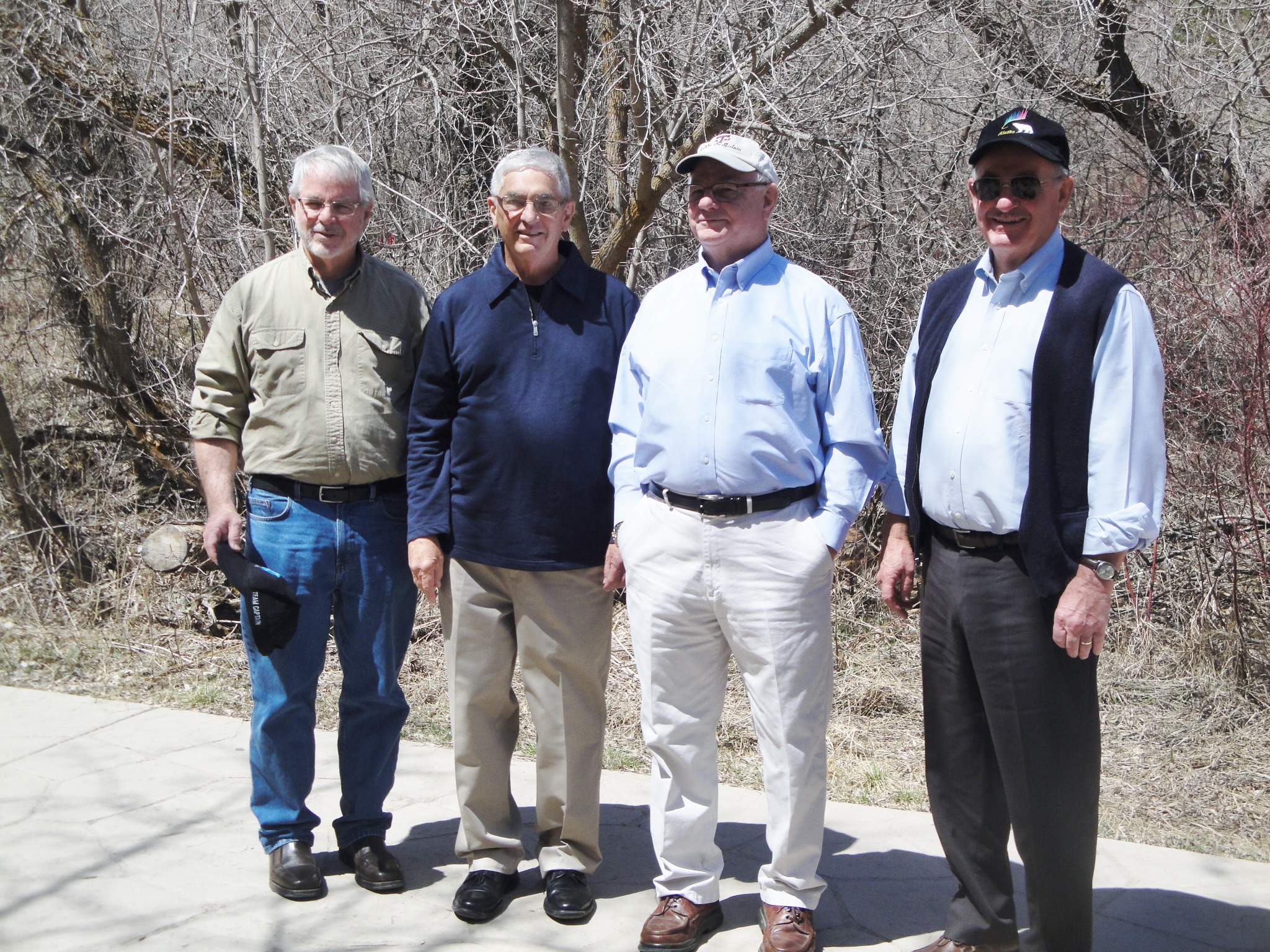
The Sandford brothers
Byron William Sandford was the youngest of four brothers, born of Mildred "Sammie" Howes Sandford and Thaddeus E. Sandford. His mother's honeymoon began on hard train seats from the hills of Kentucky to Seattle, continued on a ship bound for Alaska, then more trains where she practiced snowshoeing in the aisles, then a bulldozer — arriving finally at a remote cabin to find a bear had gotten in and eaten every provision they had. His brothers Thad and Ron were born in Alaska, Paul in Kentucky, and Byron in Texas.
His father mined for gold, started a coal mine in Alaska to supply the army in WWII, and back in Texas ran a café, a bakery, raised chickens and turkeys, hauled gravel, worked as a journeyman machinist on the railroad, and opened a sulfur mine. The lesson all four boys absorbed: a man figures out what's in front of him and gets on with it.
Byron worked alongside his father during his college summers — both at the Alaska gold camp and at the sulfur mine in Orla, Texas, operating a bulldozer, removing salt cedars in a land where water was an afterthought. One afternoon some kids nearby started taking potshots in the desert — close enough to the bulldozer to matter. Byron's father set down what he was doing, walked over, and looked at them. "That's my boy." The kids found somewhere else to be.
Paul, closest to him in age, was his childhood companion — inseparable boys, and in later life an example of quiet fortitude Byron admired deeply. One of Byron's most treasured travel memories was visiting Paul in Peru during his Peace Corps years.
Thad was the eldest by six years — too far apart for easy closeness as children. As adults they found each other and made sure to stay found, never missing an opportunity to be in the same room. On one occasion, in anticipation of Thad's visit to El Paso, Byron made watermelon wine. In Thad's assessment, it was "the most god-awful stuff I've ever tasted."
The force of personality was there from the very beginning. "Around age four, in Cleburne, Byron picked up one of the family's heavy oak chairs and ran it down the hall because he was upset about something that no one remembers or cares about." — Thad
— drawn from family recollections
II.
How He Found His Path
"He chose UTEP because he liked the Bhutanese architecture of the campus, it was close enough to Carlsbad to visit, and mostly because it wasn't Texas A&M, where two of his older brothers went. None of that military stuff for him."
— Franci
After graduating high school in Carlsbad, New Mexico, Byron enrolled at the University of Texas, El Paso, earning his bachelor's degree and two master's degrees — in political science and educational psychology. Upon graduating he did counseling work at Fort Bliss. Frances Forster and Byron married in 1971, having Adam in 1974 and Stephanie in 1976. In 1977, Franci's pursuit of a library degree pulled the family to Austin — Byron's brother Ron was already there and helped them land.
A surprising detail given his later life: he worked Barry Goldwater's presidential campaign as a Young Republican. By the 1970s he'd made a turn toward the Democratic Party and never looked back. While he endured a bit of gentle ribbing from his Republican family, politics never came between blood.
— drawn from family recollections
III.
How They Became Quakers
"We weren't involved with any religion when we got together. After a few years I started wanting a spiritual life of some kind and began exploring. I came across a book about Quakers in the library and read it. We found a small Meeting in El Paso — about six people meeting in living rooms. The values fit."
— Franci
Franci was drawn to the theology, the history, the structure. Byron was mostly interested in getting to know the people. He spent those early years on playground duty while she engaged with the faith and practice. He identified with Quaker values deeply — it just showed up more in actions than in words.
In Austin, one Sunday morning, young Adam — perhaps five years old — decided he wasn't going. Wasn't getting dressed, wasn't getting in the van, period. Byron picked him up and put him in the van naked, Adam objecting loudly the entire way. When they arrived, Byron took his hand and started walking toward the meeting house. Adam, naked on a public street heading into Quaker meeting, reconsidered his position with some urgency. Byron's position was clear: "I mean what I say."
— family recollections
IV.
The Father
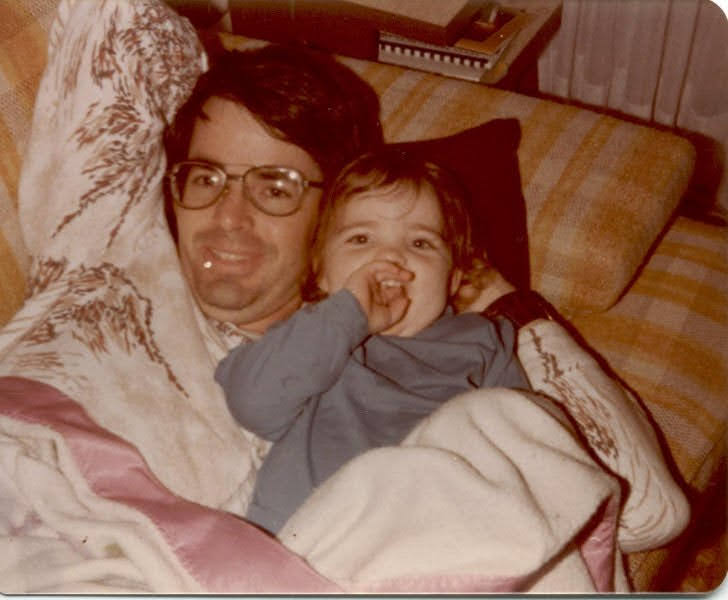
The father
"Byron was immensely proud and delighted with his children's activities, adventures and accomplishments. Their willingness to try new things, to travel, to study and work at what they chose showed that they had grown into the strong, caring, resilient, independent adults he'd hoped they would become."
— Franci
Byron participated fully in the care of his children from the day they were born — coaching soccer (and breaking his leg in seven places doing it, but that's another story), getting kids to school on time, attending every band performance, every ballet recital.
One evening a real estate agent called for Byron. When Franci said he was reading to the children, the agent said she'd wait. Thirty minutes, she told her. She signed off — and told Franci years later she'd never forgotten it, a small moment that said everything about what Byron believed a man's time was for.
V.
The Work That Mattered
"Having worked hard even as a child to earn some spending money, he had a keen appreciation for hard work and creative methods of making a living. He'd seen his highly talented but undereducated Dad struggle at times to make ends meet, and took that fortitude with him into everything he did."
— Franci
He carried that into the mortgage business with a particular desire to help the people everyone else turned away. In Texas in the 1980s that meant low-income Hispanic families mostly — paid in cash, seasonal work, no bank accounts, no credit history, no continuous employment record. The standard mold rejected them entirely. Byron learned the rules, learned the exceptions, and coached clients on exactly what they needed to do to eventually qualify. He was proud of every one of them.
When the Texas economy collapsed in the late eighties and property started going for nothing, he and his brother Ron saw an opening. They bought the worst duplexes in the most boarded-up neighborhoods — cockroaches, crack pipes — tore out the dividing walls, rehabbed them into single-family homes, and sold them at modest prices to families who couldn't otherwise have become homeowners. It meant the world that he was able to help people that otherwise wouldn't achieve the American Dream.
The partnership was a natural fit: Ron could sell ice cream to Eskimos, and Byron could figure out how to balance it, manage it, and finance it. Also — Byron had no sense of smell, so he was sent in first to "assess" any potential properties. Ron's wife Mary Jane ran the office. Ron's son Blake built. Adam and Stephanie helped with finishing work. Thad and Ann's son Ryan joined in as well, making it a true "Sandford Company." There was an article in the Austin newspaper about their work, and ultimately they ended up recovering more properties than the city of Austin's own affordable housing programs.
Then came Armadillo Junction, a small RV park near Kerrville — grass nose-high, utilities out of code, structures outdated. With a severe local housing shortage and families living year-round in campgrounds, Byron found himself, somehow again, in a position to help people find homes. The armadillo on the sign was drawn by Stephanie.
As a final chapter in Byron's Texas saga, it was a good one.
— Family recollections
VI.
William Penn House
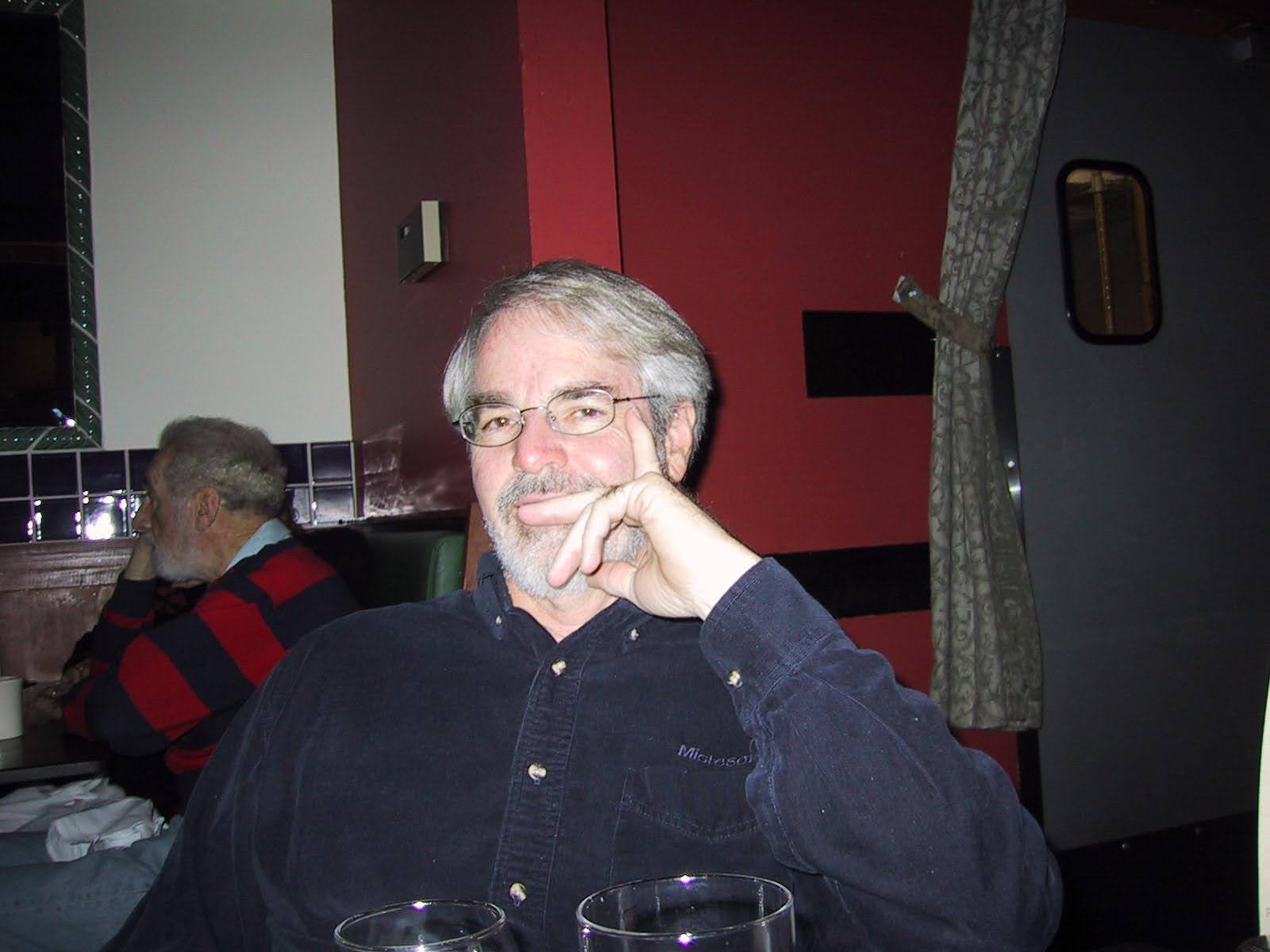
"One day Byron was sitting at the RV park, looking around at what remained, and he thought: my wife's gone, my kids are gone, my dog died. What the hell am I doing here? He gave it up, picked up a job in Washington with the Quaker organization, and started a whole new life."
— Thad
He'd seen an ad for the director position at William Penn House in Washington, D.C. A Quaker hospitality center dedicated to social justice — it was everything he'd been building toward. His political science degree, his Quaker faith, his desire to be in the political center of the country. He picked up and started a whole new life.
He spent sixteen years there. He ran the place, unclogged the toilets, fixed what broke. He had a gift for attracting people and programs — anyone doing serious work on peace and justice found their way to his door. Peace Fellows. Hunger Fellows — young people who spent time working on food scarcity in Washington, went out across the country, came back to debrief and do it again.
The optimism, energy and vigor of these young people struck him daily. He often said that anyone skeptical about young people should spend time at William Penn House. He insisted on radical hospitality for whoever showed up at the door — there is that of God in everyone, and ours is to joyfully seek it. The latter part, he felt, was usually left off and shouldn't be.
You never quite knew what you'd find when you came on duty. One day a staff member arrived to find all the carpets had been ripped out. Another Monday, drywall tools were spread across the dining room table, a half-finished repair sat upstairs, and Byron was back in the office having completely forgotten about both. He'd gotten a phone call. No task force, no months of deliberation — just a wild hair and a willingness to deal with the consequences.
When the house had a difficult guest, you could always count on him to handle it. Kelli, a young intern, once had a guest barge through a staff-only door late in the evening — pushy, indignant, wouldn't leave. She managed to get him out but felt shaken, and the next morning asked Byron for help. That afternoon she walked into the front office just as Byron was finishing a conversation with the man. He was a different person — quieter, smaller somehow, nodding repeatedly with a courteous "absolutely" and "no worries." Kelli's mouth fell open. She turned to Byron: "Wow, how did you do that?" He said something quippy and southern. She can't remember exactly what. She's never forgotten the moment.
- "I spent nine years working with and for Byron. He embraced ideas with the spirit of 'let's try it and see what happens' — and if it didn't work, 'might have been the wrong time or the wrong people.' It was such a unique experience to have a boss who supported that kind of creativity. My time with Byron made me a better and more healed person." — Brad
- "He told me once that he hoped I'd have his job someday. His faith that I could lead a nonprofit myself is something that sticks with me to this day. He invested in the next generation of Quakers." — Janaki
- "He left me maladjusted — I'd had such a good model in him that every other boss seemed like a disappointment by comparison." — Andrei
- "He always had our backs. He is one of a handful of leaders who demonstrated for me what good leadership looks like — so that I could recognize and respond accordingly to bad leadership in the future." — Kelli
VII.
The Connector
Twenty-five years ago, the political scientist Robert Putnam published Bowling Alone, lamenting the decline of social capital in America. Putnam described three kinds of people: those poorly connected to others, those reasonably connected, and those who actively connect others to each other.
Byron was both connected and a connector.
When the women of Baltimore Yearly Meeting gathered each winter for their annual retreat weekend — husbands and partners emphatically not invited — Byron quietly organized a dinner party for the men left behind. Quakers, non-Quakers, people who wouldn't otherwise have been in the same room.
When the pandemic shut everything down in 2020, Byron invited a small group of men to a monthly Zoom lunch. One of them he'd just met as a neighbor. When he and Susan moved to Friends House, he added another new neighbor to the group. These monthly gatherings — Lunch with Byron — continued until nearly the end of 2025.
— Bill
VIII.
Susan
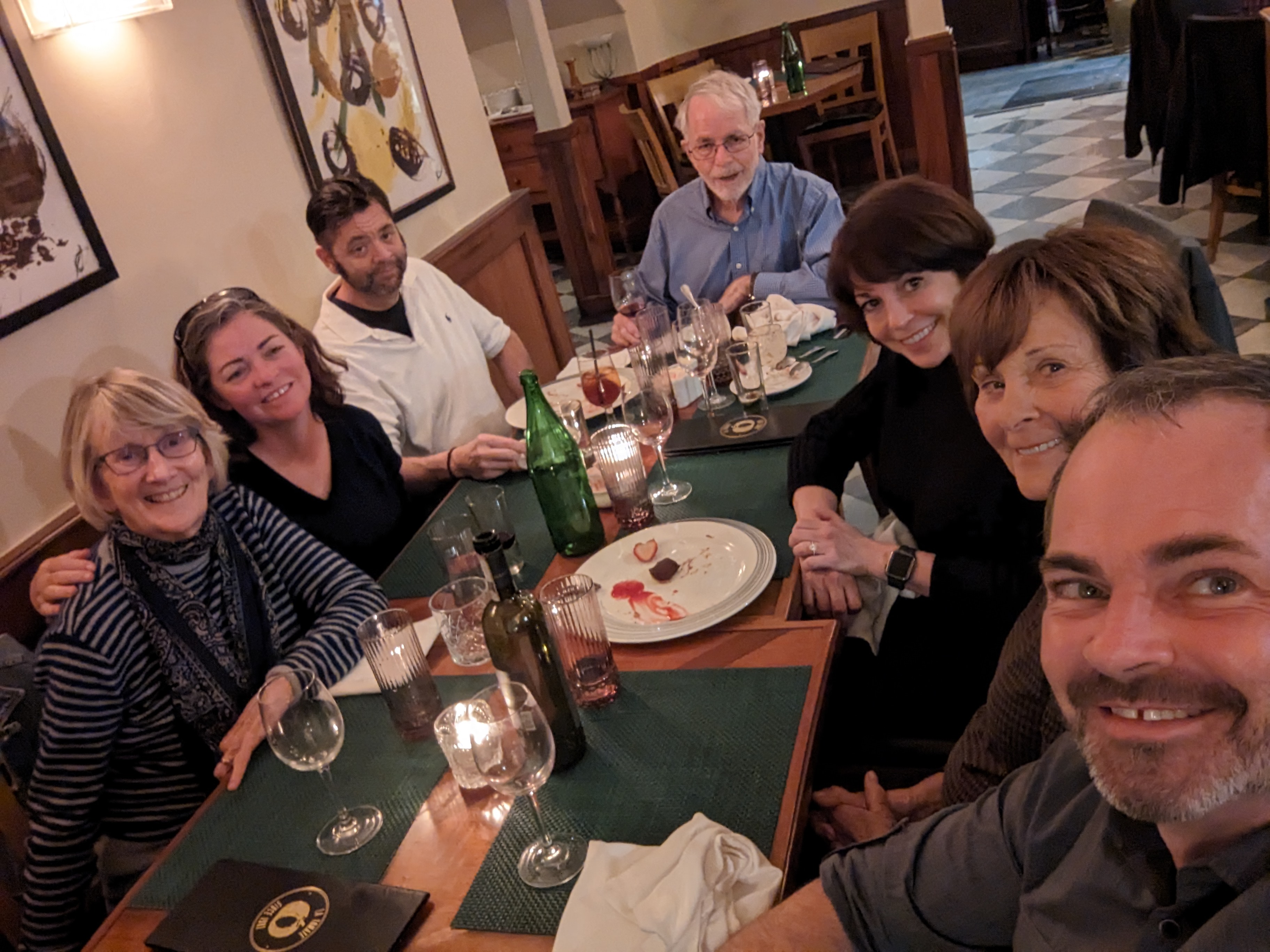
Around the table
"Good looking, smart and profane — just what I like in a lady."
— Byron, to just about anyone who'd listen
"I remember when he came back from a trip talking about a wonderful woman he'd met on a plane named Susan. I feel honored that I was there as that relationship started." — Mansir
1. The Meeting
June 2001. A plane from Dallas to DC.
When Susan looked down the aisle and saw Byron she thought, "I'll never be seated next to him, he's too cute." Byron was intrigued by the rather verbal and emphatic way she read the New York Times.
They spent the entire plane ride talking, jumping immediately into the three forbidden topics — politics, family and religion. He spoke seriously and matter-of-factly about how important being a Quaker was to his life, his work with Friends General Conference, the William Penn House, and his deep love for his family. Susan had just spent the previous week at a silent meditation retreat and found this a wonderful transition back to the real world.
They did not exchange information on the flight, but the memory of Susan stuck with Byron. He remembered that she was the Director of some social studies organization, so broke out the phone book and called… every single one, until he found her.
2. Our New Life Together
Byron and I built a life together in DC and he enhanced my life in many, many ways. He cooked dinner every single night. Breakfast too. I had been eating pasta and pizza for five years before he took over the kitchen. We were quickly recruited to various committees at Friends Meeting of Washington and, traveling to many yearly meetings, Byron introduced me to what Quakerism looked like all over the country.
We enjoyed every family reunion with his brothers, their wives, and sometimes adult children with their children. These events were each a delight — especially Alaska, since that trip took us to places their parents had lived in the 30s and 40s.
Byron listened thoughtfully to all of my work stories, offering his wisdom only if asked. We traveled together to the annual conferences of National Council for Social Studies and, of course, Byron made friends among those colleagues.
3. The Parkinson's Years
Byron was diagnosed in February 2004, just months after we married in August 2003. Although it was a shock, he dove deep into what the possibilities were. We went to the World Parkinson's Conferences, including one in Scotland, a trip that ended on the Isle of Skye. Seeing participants who were exercising and doing well, Byron decided that would be his path. He committed to it completely — not because he loved exercise; everyone who knew him confirms he had not a single athletic bone in his body — but because the evidence said it worked.
Every time he really committed, he saw improvements. Byron was remarkably courageous and demonstrated equanimity and grace throughout twenty years with Parkinson's.
As for Byron's athletic credentials: Susan's brother Bill asked the critical question when she told him about this man — what sports teams does he follow? None. What does he do with that part of his brain? He found better things to do with it.
IX.
Africa
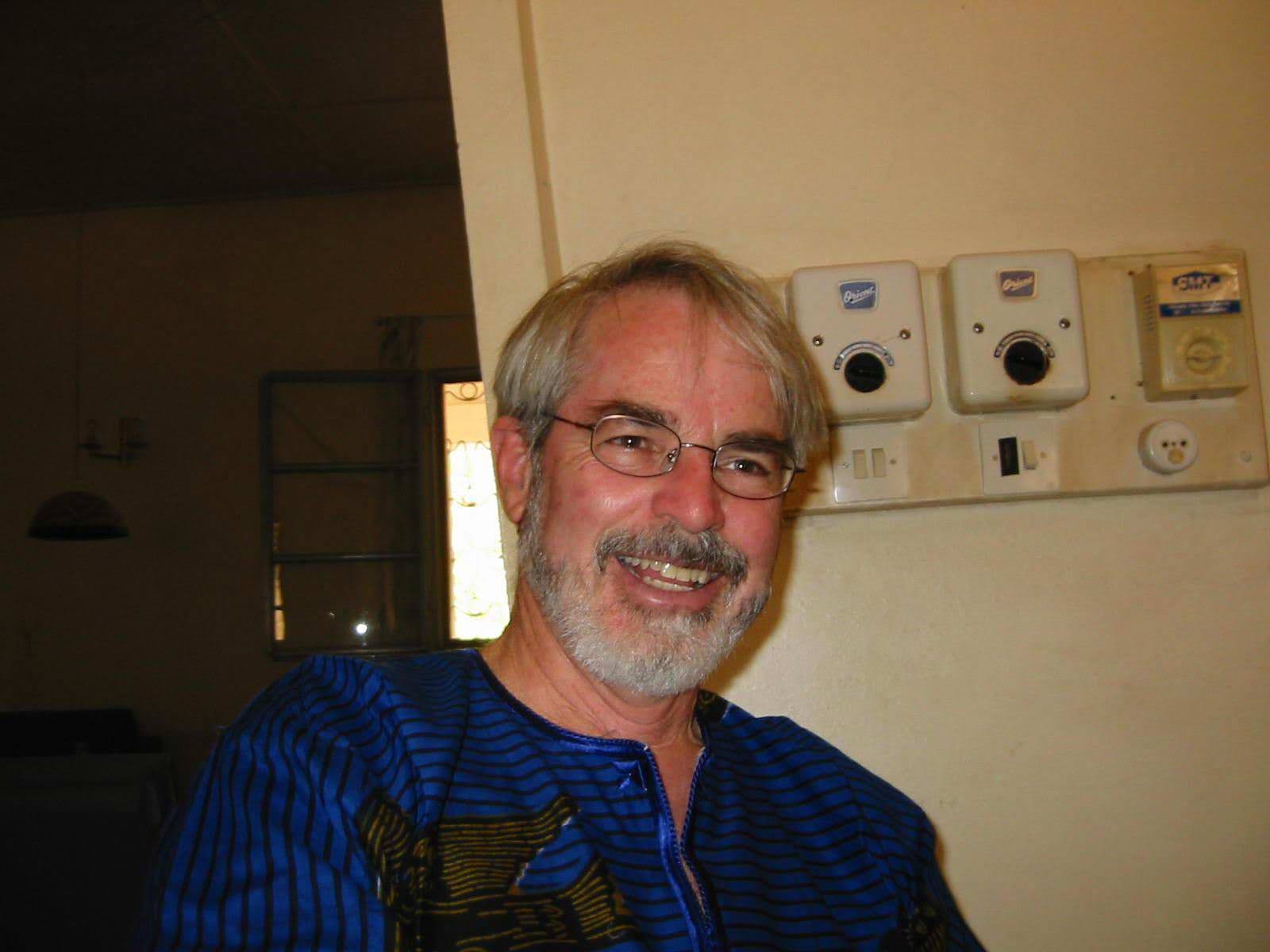
Niger, with Stephanie in the Peace Corps
When Stephanie was in the Peace Corps in Niger, Byron and Adam flew in to spend a week or two with her in the bush, before travelling with her in Europe.
His snoring could be heard across the entire village. People asked if he was okay. Stephanie's villagers thought that he was over 100 years old, as Nigeriens don't grey until very old.
Stephanie had a small cloth chair that had been sitting in the African sun for years. It handled her weight perfectly fine. Byron sat down and went straight through to the ground — first in one of her two chairs, and then in the other.
Then there was the goat. Stephanie had arranged for one to be slaughtered for the family visit — the whole animal, all the bits and pieces, subsistence living. Adam was inside working on sterilizing the water when Byron appeared in the doorway holding a pan of something, shaking it invitingly. Adam popped a piece in his mouth. Salty, buttery, like popcorn.
It was brain.
Adam squeaked like an eight year old in a haunted house.
Byron's silent bobbing laugh. The sh*t-eating grin.
— family recollections
X.
The Man Himself
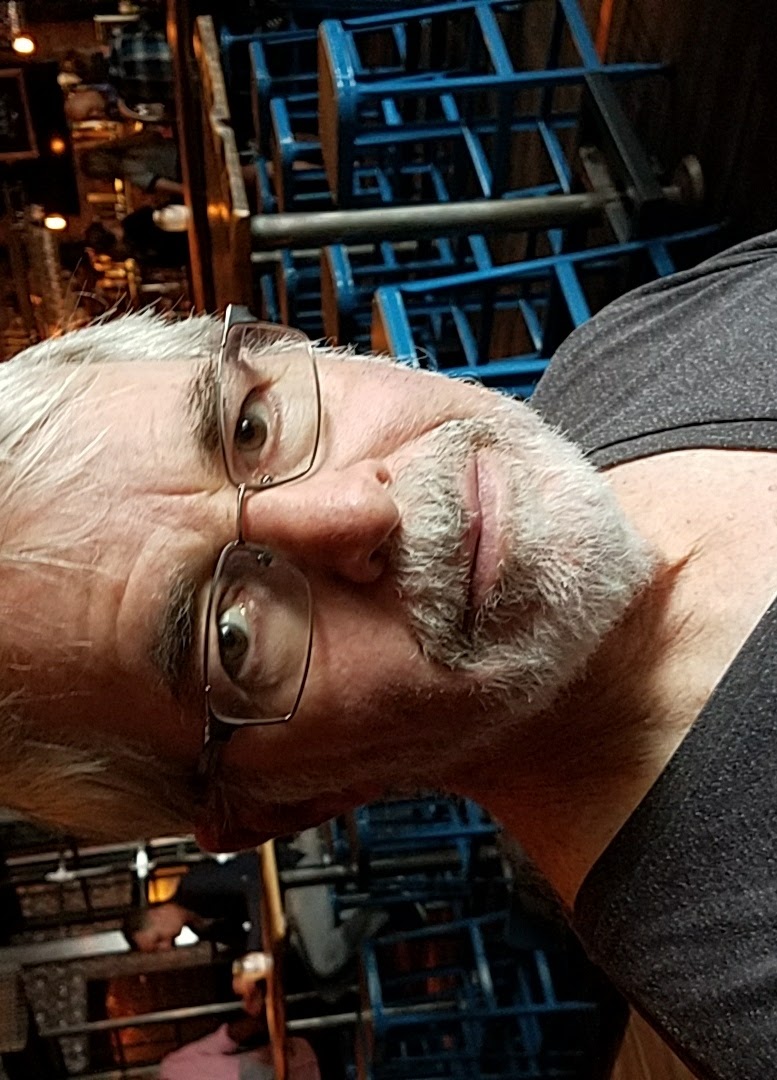
Byron had a laugh that made no sound. A slow bob, a sh*t-eating grin — especially when a prank had landed exactly where he'd intended. He was in it for the long game.
When Adam was about fourteen, Byron stalked him through the house one evening while he was doing laundry. He found a closet on the route. Got in. Closed the door. Settled in with a glass of wine and waited. By the time Adam opened the closet door and got the jump scare, the glass was noticeably lower. Byron had been in there a while. The silent bob. The grin.
Byron was known for having "no filter" — a trait that was factory-installed, not acquired. His mother lived in perpetual shock and horror at what he was about to say, because she knew that when he said it, his voice carried and everyone in the room — or within shouting distance — was going to hear every word. He told tall tales that would end with him laughing when someone believed them. He didn't code switch. Whatever the room, whoever was in it, he was the same Byron. This was a lifelong condition; his brothers remembered it from early childhood, and Susan, Stephanie and Adam confirmed it independently decades later.
At some point during his marriage to Susan, they were making their wills. The lawyer asked when Franci had died. She hadn't — they'd divorced. Asked when the divorce was finalized, Byron said: "Oh, three or four or five years ago." He genuinely didn't know. Some details simply didn't lodge.
Underneath the pranks and the Byronisms and the Texan directness: genuinely caring, genuinely interested in people, spoke from his heart. Carole, one of his closest friends from the El Paso years, said it best — the main thing about Byron is that he was funny. He constantly made mundane daily things delightfully funny. He had an innate talent for it.
— family recollections, Carole
XI.
Never Stop Moving
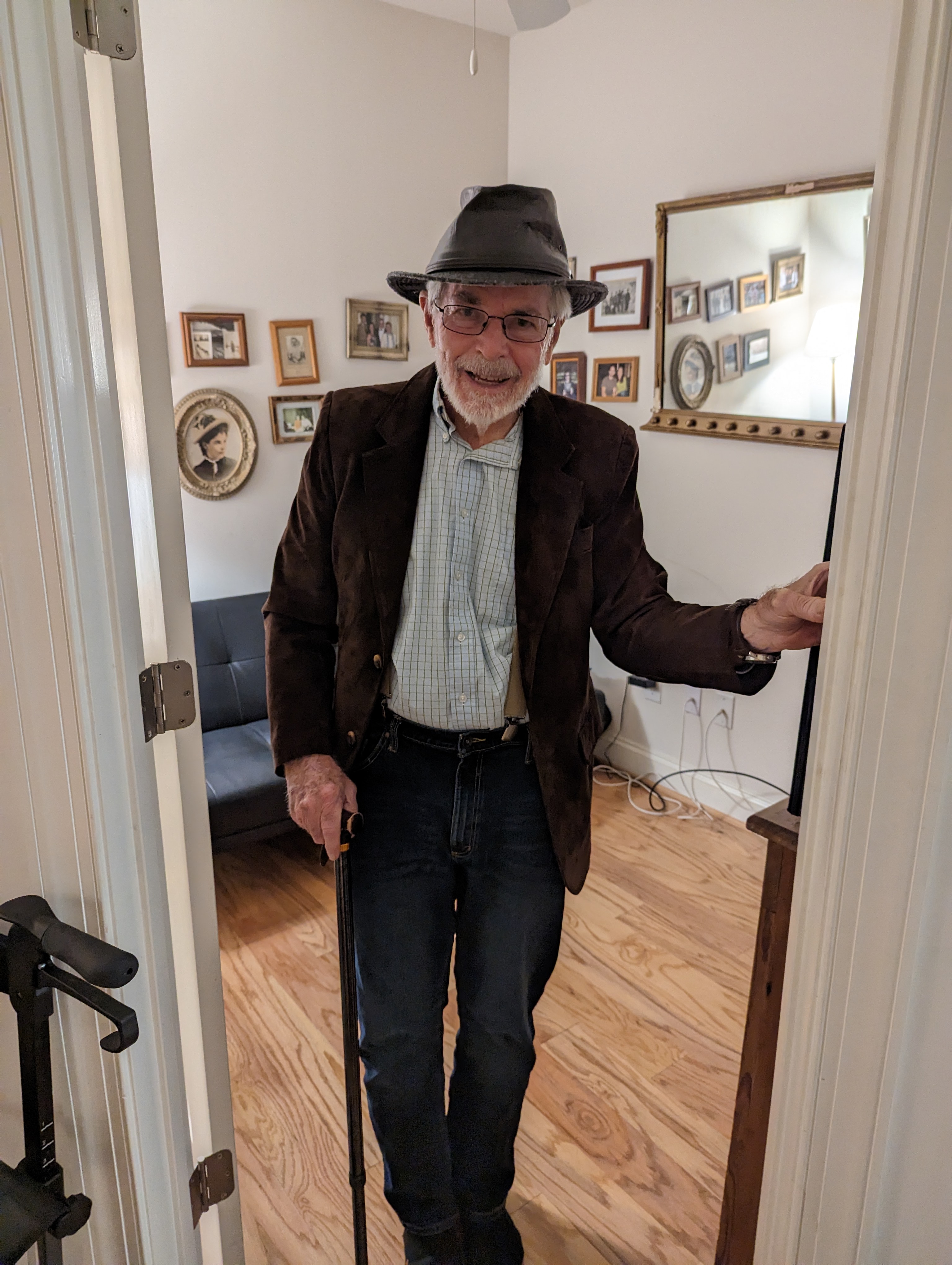
Still himself
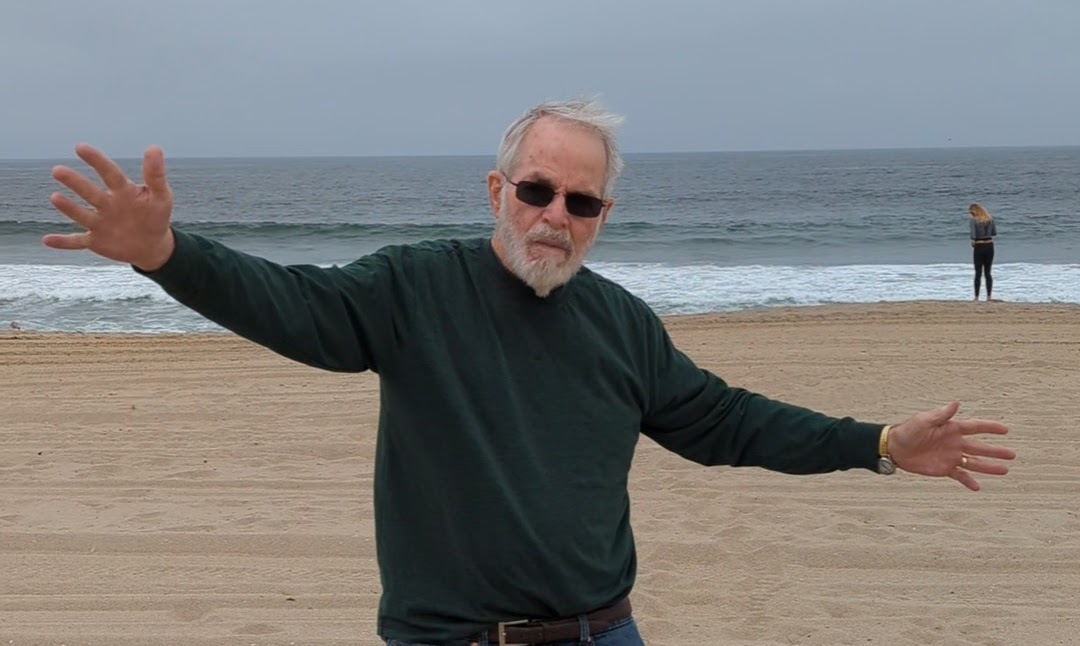
Byron loved to get his hands in the dirt. While living in McLean Gardens in DC, they had a plot in the community garden where the two of them loved finding interesting plants to nurture. At Friends House he had a garden plot — first walking with Susan to tend it, then with a cane, then a walker, then on his scooter. He would sit on an upside-down bucket to weed. Seemingly content, Kathleen said, to just be.
He attended every Friends House memorial — every one, for every resident who passed. He and Susan were always there, present, to cheer the departed on.
"I never heard Byron complain as Parkinson's disease increasingly attacked his body. He kept going with determination, doing for himself all he could, but accepting the help he needed, with a quiet 'Thank you.'" — Wallace
The Sunday before he died, Byron was propped up against the kitchen counter doing his exercises.
— Kathleen, Wallace, and family recollections
XII.
Recollections
- "Most of all, my Padre was my friend. We could talk and laugh for hours and I miss calling him for his kind, and often humorous, advice when I'm feeling lost and alone." — Stephanie
- "Byron came to the center for a meeting and we had dinner together. It was a time of transition in my life — I was lost and confused. He talked about a transition in his own life when he'd felt the same way, but ultimately found his way to a far better future. It was so wonderfully non-judgmental and open. I've thought about it every time since when I've been in another transition." — Debbie
- "Yesterday for the first time in my life I took my birthday off — a policy Byron had at the WPH. I thought of him all day." — Julie
- "About three weeks ago, while traveling in Turkey, we got a call at four in the morning. It was Byron wanting to chat. It was the last time." — Norval
- "He made me such a better — and more healed — person." — Brad
- "Byron and Franci were the closest friends we ever had, never to be replaced. I mean that sincerely." — Carole
- "He was a funny, joyful, discerning Friend who gave generously of himself to the Religious Society of Friends." — Michael
- "He lived his faith with determination and good humor." — Janaki
- "He persevered and succeeded in every case in getting to his destination. I was impressed by his courage, determination, and tenacity to pursue his goal. He was and is an inspiration to me, to not surrender to limitations, but to seize the opportunity and never give up." — Richard
- "Fly on now Byron, free of rollators, wheelchairs, walkers and bandaids. Run, run, run." — Patricia
- "None of these issues are easy, but you seem to make them easy." — Thad, the night before Byron died
XIII.
Byronisms
"Dad always had a particular turn of phrase for any given occasion. While much was from his Texan rearing, the bulk were simply… Dad." — Adam
Tap any card to read the story behind it.
XIV.
Holding Hands
In the last hours, Byron's brother Thad called. He talked his way through a lifetime of shared memories — the oak chair in Cleburne, the bulldozer on the Pecos, the watermelon wine in El Paso, selling ice cream to Eskimos with Ron, the trailer park epiphany. He told Byron he was loved, that the whole Sandford clan saw his strength, and to rest easy. At the end, Byron tried to speak. "He just said I love you. I think. Yeah, he nodded."
In his life, Byron held the hands of three people as they passed — his father Thaddeus, aunt "Bill," and Franci's Aunt Rita. It was deeply meaningful to him that he could be present for those moments.
After a lifetime of holding others, this time Susan, Stephanie, and Adam were holding his hand at the end.
— Adam
Goldenrod
"Goldenrod" — recorded by a friend of Adam's, played the night Byron died